Summer Series: “With Cruise Ships, You’re the Conductor of the Orchestra. The Captain Knows the Ship, We Know the Port.”
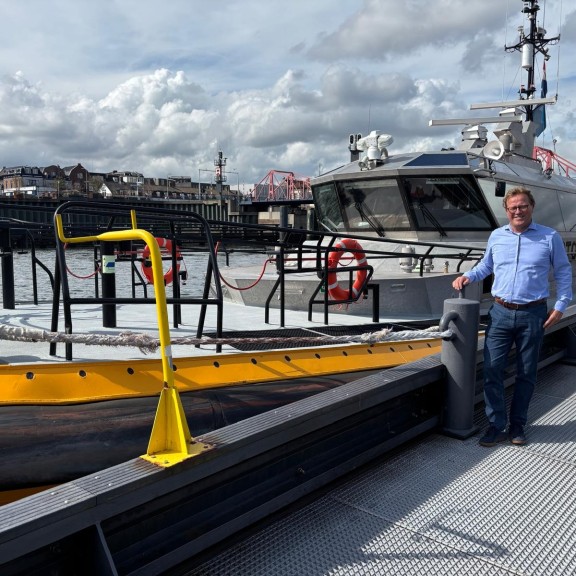
Part of a multi-part series. Today featuring Bart Blokker, Chairman of the 'Loodswezen Amsterdam-IJmond Region'.
“A cruise ship captain may visit Amsterdam only once in a lifetime,” explains Bart Blokker. “It is impossible for anyone to know the local conditions of every port in the world. That’s why a pilot boards the vessel at sea, on approach to the port. The pilot is familiar with the harbor, locks, canal system, and all the nautical specifics of the region. From that moment on, the pilot literally guides the ship through the complex Amsterdam port area. The pilot advises the captain on the route, speed, and maneuvers required to safely navigate the locks and the North Sea Canal on the way to the Passenger Terminal Amsterdam (PTA).”
From Cruise Officer to Maritime Pilot
Blokker knows better than most what goes into bringing a cruise ship safely into port. Before joining the Dutch Pilots’ Association, he spent ten years in the international cruise industry. Starting as a deck officer, he eventually became a staff captain on cruise ships sailing all over the world. At the time, he had no idea he would one day become a pilot.
“My mother would have preferred that I became an airline pilot,” he says with a smile. “But in the end, I stayed in shipping.” His years at sea have given him a lasting appreciation for the cruise sector. “Cruise captains maneuver their ships into different ports almost every day. They know their vessels inside and out. Our role is not to take over, but to share our local knowledge of Amsterdam, IJmuiden, and the North Sea Canal.”
From the North Sea to Amsterdam
For cruise ships, preparations often begin months in advance. “We usually know at the beginning of the year exactly which ships will arrive and when,” says Blokker. “On the day itself, the pilot boards the vessel around ten kilometers offshore. From there, we guide the ship through IJmuiden, the locks, and the North Sea Canal toward Amsterdam.”
The role differs considerably from piloting a cargo vessel. “On a cargo ship, the pilot often takes a very active role. With cruise ships, you’re more like the conductor of an orchestra. The captain knows the ship, and we know the port.”
The Bend Near Central Station
Although modern cruise ships are highly advanced from a technical perspective, certain moments still require extra attention. “The bend near Amsterdam Central Station and turning the ship near the Passenger Terminal are the most challenging parts,” Blokker explains. “Large cruise ships really only fit through that area in one particular way. That’s where experience becomes invaluable.”
Weather conditions also play a major role. Because cruise ships have such a large profile above the waterline, they are particularly sensitive to wind. “On windy days, you have to anticipate constantly. That makes the job challenging, but it is also where our added value comes into play.”
Amsterdam as a Highlight of the Journey
According to Blokker, people sometimes forget that every cruise ship carries thousands of holiday stories. “Many passengers look forward to their journey for months or even years,” he says. “For many international travelers, Amsterdam is a destination that is high on their bucket list.” He sees that enthusiasm reflected among crew members and captains as well. “That’s exactly why I enjoy being part of these arrivals. You know that a special visit to Amsterdam is about to begin for the passengers. Our job is to make sure everything happens safely and smoothly.”
Invisible, Yet Essential
For most passengers, the pilot’s work remains unseen. “If everything goes well, nobody even notices we were there,” Blokker says with a laugh. “But behind every safe arrival lies a great deal of preparation, expertise, and cooperation.” Although cruise shipping accounts for only a small share of all vessel movements in Amsterdam, it remains one of the most rewarding parts of the profession. “No ship, no crew, and no day is ever the same.”
And his favorite moment?
Blokker does not have to think long about the answer. “When you’re sailing toward Amsterdam with a cruise ship early in the morning and you see the sun rising over the city, it remains a special experience every single time.”
Part of a multi-part series. Today featuring Bart Blokker, Chairman of the 'Loodswezen Amsterdam-IJmond Region'.
“A cruise ship captain may visit Amsterdam only once in a lifetime,” explains Bart Blokker. “It is impossible for anyone to know the local conditions of every port in the world. That’s why a pilot boards the vessel at sea, on approach to the port. The pilot is familiar with the harbor, locks, canal system, and all the nautical specifics of the region. From that moment on, the pilot literally guides the ship through the complex Amsterdam port area. The pilot advises the captain on the route, speed, and maneuvers required to safely navigate the locks and the North Sea Canal on the way to the Passenger Terminal Amsterdam (PTA).”
From Cruise Officer to Maritime Pilot
Blokker knows better than most what goes into bringing a cruise ship safely into port. Before joining the Dutch Pilots’ Association, he spent ten years in the international cruise industry. Starting as a deck officer, he eventually became a staff captain on cruise ships sailing all over the world. At the time, he had no idea he would one day become a pilot.
“My mother would have preferred that I became an airline pilot,” he says with a smile. “But in the end, I stayed in shipping.” His years at sea have given him a lasting appreciation for the cruise sector. “Cruise captains maneuver their ships into different ports almost every day. They know their vessels inside and out. Our role is not to take over, but to share our local knowledge of Amsterdam, IJmuiden, and the North Sea Canal.”
From the North Sea to Amsterdam
For cruise ships, preparations often begin months in advance. “We usually know at the beginning of the year exactly which ships will arrive and when,” says Blokker. “On the day itself, the pilot boards the vessel around ten kilometers offshore. From there, we guide the ship through IJmuiden, the locks, and the North Sea Canal toward Amsterdam.”
The role differs considerably from piloting a cargo vessel. “On a cargo ship, the pilot often takes a very active role. With cruise ships, you’re more like the conductor of an orchestra. The captain knows the ship, and we know the port.”
The Bend Near Central Station
Although modern cruise ships are highly advanced from a technical perspective, certain moments still require extra attention. “The bend near Amsterdam Central Station and turning the ship near the Passenger Terminal are the most challenging parts,” Blokker explains. “Large cruise ships really only fit through that area in one particular way. That’s where experience becomes invaluable.”
Weather conditions also play a major role. Because cruise ships have such a large profile above the waterline, they are particularly sensitive to wind. “On windy days, you have to anticipate constantly. That makes the job challenging, but it is also where our added value comes into play.”
Amsterdam as a Highlight of the Journey
According to Blokker, people sometimes forget that every cruise ship carries thousands of holiday stories. “Many passengers look forward to their journey for months or even years,” he says. “For many international travelers, Amsterdam is a destination that is high on their bucket list.” He sees that enthusiasm reflected among crew members and captains as well. “That’s exactly why I enjoy being part of these arrivals. You know that a special visit to Amsterdam is about to begin for the passengers. Our job is to make sure everything happens safely and smoothly.”
Invisible, Yet Essential
For most passengers, the pilot’s work remains unseen. “If everything goes well, nobody even notices we were there,” Blokker says with a laugh. “But behind every safe arrival lies a great deal of preparation, expertise, and cooperation.” Although cruise shipping accounts for only a small share of all vessel movements in Amsterdam, it remains one of the most rewarding parts of the profession. “No ship, no crew, and no day is ever the same.”
And his favorite moment?
Blokker does not have to think long about the answer. “When you’re sailing toward Amsterdam with a cruise ship early in the morning and you see the sun rising over the city, it remains a special experience every single time.”